Project / active dogfood
Olive
A private portfolio cockpit for reasoning about concentrated employer stock, future vests, tax-lot tradeoffs, staged exits, and the difference between a dashboard and a decision system.
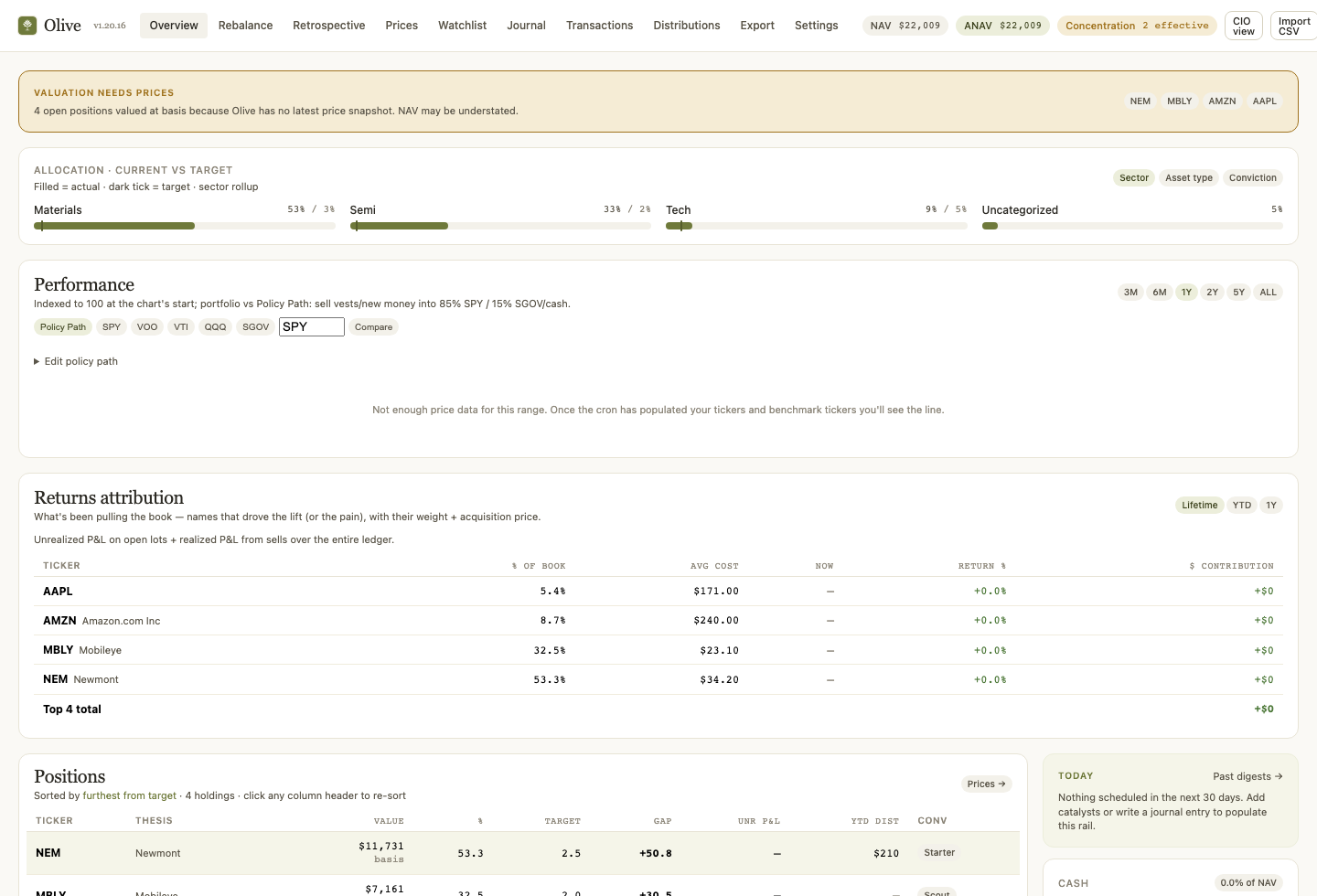
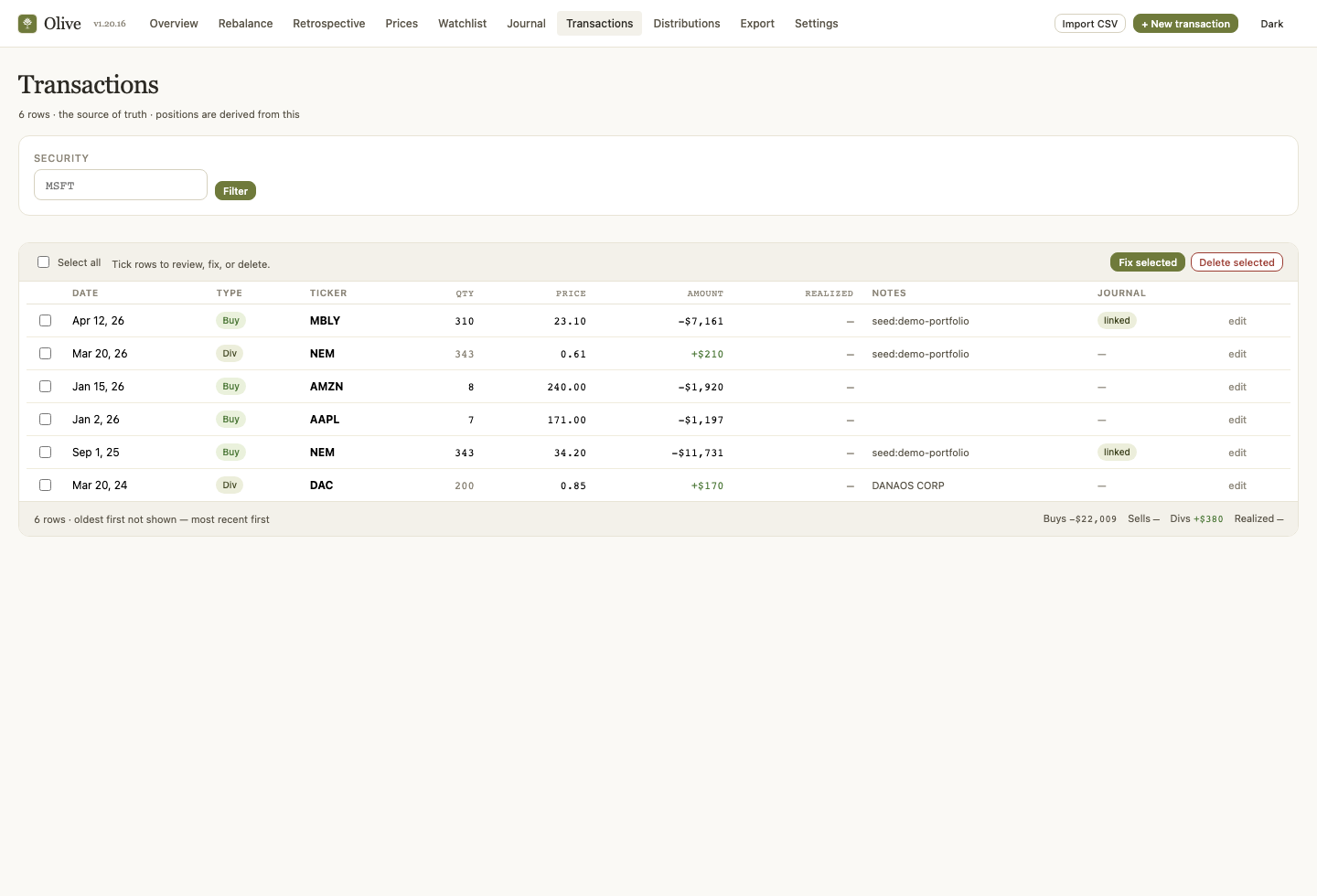
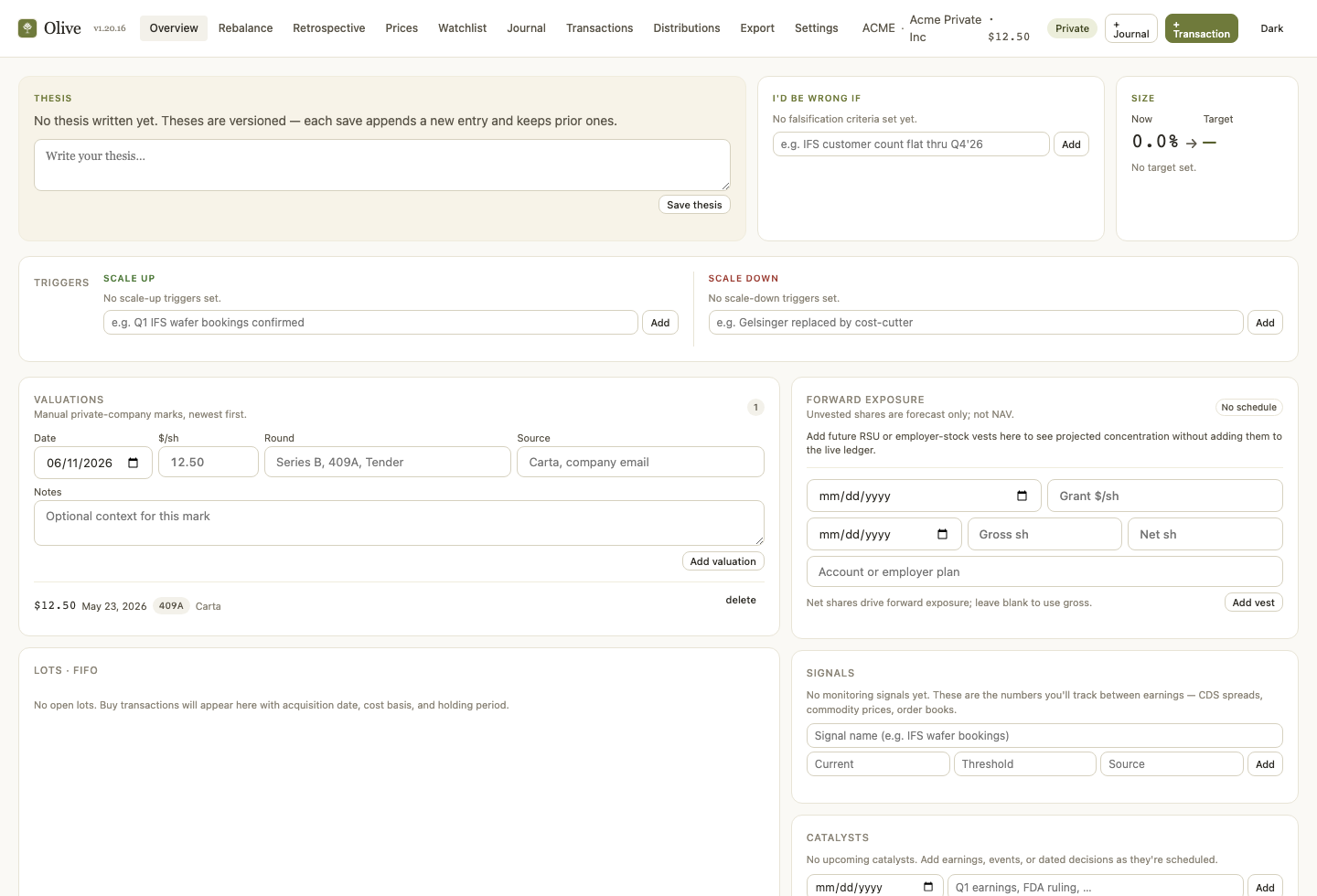
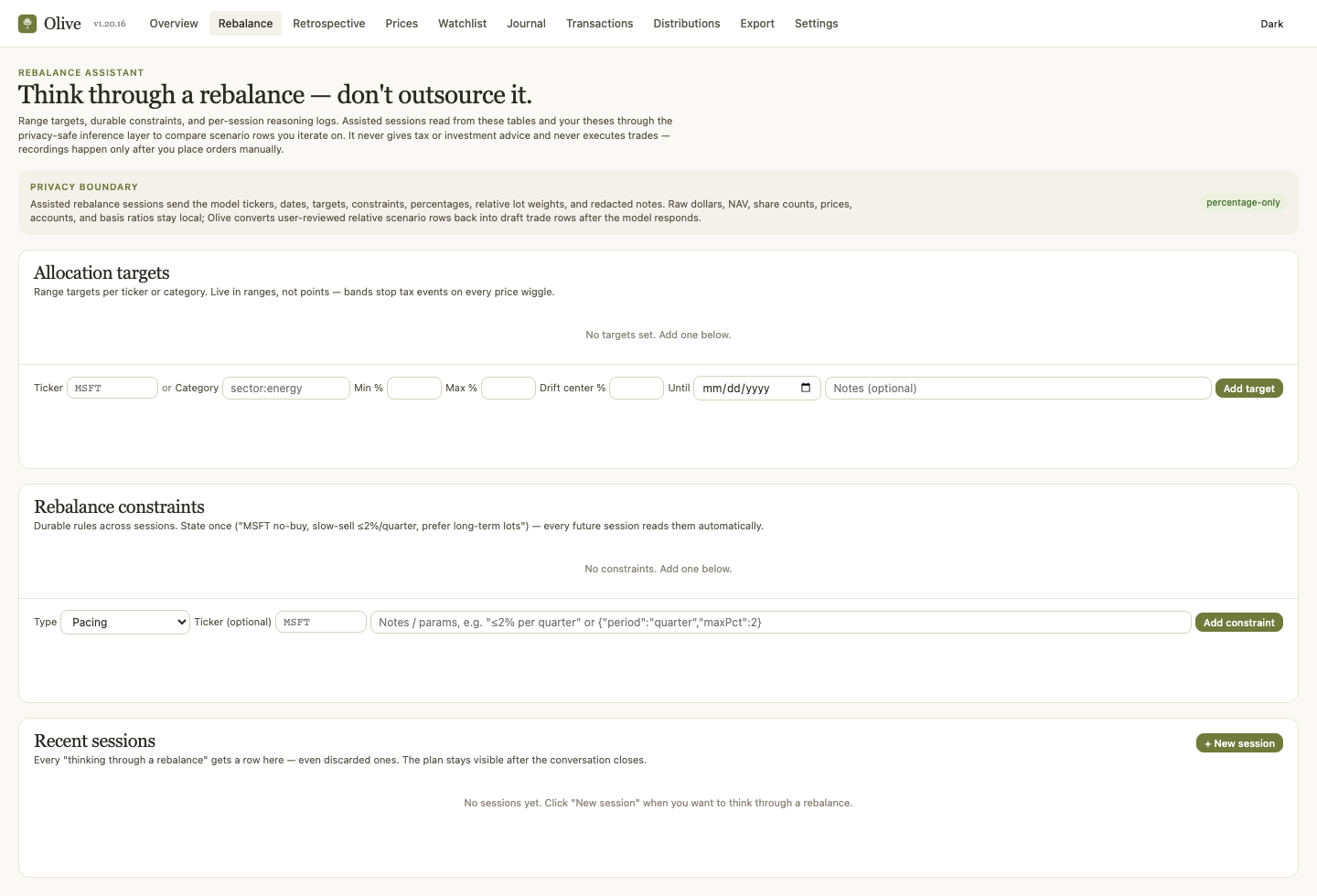
Screenshot note: these images are from Olive's local demo seed. They do not show personal balances, private transactions, employer data, or real financial assumptions.
Problem
Concentrated employer stock is not a one-time rebalance problem. RSUs vest, ESPP purchases add exposure quietly, tax lots age, and future compensation changes the decision about the shares already sitting in the account.
The recurring question is simple to ask and annoyingly hard to answer with a broker page or spreadsheet: how much should I sell, when should I sell it, and what after-tax tradeoff am I actually making?
Operating Philosophy
The portfolio is closer to a living thing you tend than a static object you optimize once.
Olive is built around reducing decision drift. The important state should be explicit: what I own, what it cost, what vested, what is still scheduled to vest, what assumptions I am using, what scenario I am considering, and what I believed when I made the decision.
The tool should help compare careful trims over time. It should not pretend to be a broker, tax preparer, or investment adviser, and it should not turn an LLM into a black-box source of instructions.
System
Scheduled jobs refresh provider data separately; demo screenshots are rendered from local seed rows.
What It Proves
- Domain model A portfolio tool is not generic CRUD. Lots, vests, cash, basis, source tags, and future exposure need explicit semantics because the app can otherwise imply money or liquidity that does not exist.
- Product judgment The wedge is employer-stock deconcentration. The sharp problem is not "track my portfolio"; it is "help me move from concentrated equity compensation toward the portfolio I meant to own."
- AI boundary Models synthesize; users decide. The useful AI layer is constrained by explicit user-owned state. It should surface tradeoffs, citations, and questions, not recommendations or automated actions.
Tradeoffs
Olive favors a small, inspectable Cloudflare-native stack over a heavier backend. That keeps the operational surface manageable for a personal cockpit, but it also means integration breadth and enterprise-style controls are intentionally out of scope for now.
The current public artifact is the writeup and sanitized screenshots. The codebase remains private because the app handles personal financial workflows and the interesting public signal is the system shape, not the raw repository.